



Rice & Asian Food

Introduction
How to Cook Rice
General
Use just 1 1/4 cups water for every 1 cup of Jasmine rice (the standard for typical white rice is 1 1/2 cups water to 1 cup rice).
Convert Cup (US) to Deciliter
Basmati rice generally has a higher fiber content than jasmine rice, especially in its whole grain form. Vitamins and minerals: both types of rice provide some essential vitamins and minerals, but the differences are minimal. Whole grain versions of either rice are more nutritious than their white counterparts.
Rice naturally contains inorganic arsenic, which is considered carcinogenic.
Norway supposedly has a contingency plan with over 3,000 genetic samples of rice varieties placed on a high mountainside in case of a global or climatic catastrophe.
In Asian cuisine is common practice to boil rice in a chicken broth.
You could also try out a garlic-fried rice.
Rice Sorts
🚑 First Aid Rice Kit 🚑
Sticky Rice vs Parboiled Rice
Parboiled rice is regular white rice that has been pre-treated by being steamed under pressure. This process forces nutrients, especially t(h)iamine B1 vitamins, from the husk into the rice grains, increasing the rice's nutritional value and making it firmer. Parboiled rice doesn't stick together as much during cooking as regular white rice and has a mild flavor that goes well with many different dishes.
While cooked rice is not supposed to stick, in Asian cuisine they often serve steam boiled sticky rice (glutinous rice) on the side to avoid that they absorb moisture from the items on the main plate. Sticky rice is ideal for eating with chopsticks because its high starch content causes grains to cling together in clumps, preventing them from falling between the sticks. While often used for dishes like sushi, Thai sticky rice, or onigiri, it is best eaten by bringing the bowl close to the mouth, using the chopsticks to push or shovel the rice.
Khao Khua in Thai cuisine is made with sticky roasted rice.
See Sushi rice further below for another use of sticky rice.
Puffed Rice vs Toasted Rice
Toasted rice, or khao khua in Thai, is uncooked glutinous (sticky) rice roasted in a dry pan until golden brown and aromatic, then typically ground into a coarse powder. It could be prepared as toasted coconut rice.
For puffed rice see the deep-frying section.
Bomba Rice
Bomba rice is a premium, short-grain Spanish rice, often called "paella rice," renowned for its ability to absorb up to three times its volume in broth (versus the usual two) while remaining firm and separate, rather than sticky. Cultivated mainly in eastern Spain, it is high in amylose, making it essential for traditional paella, preventing a gummy texture. Bomba rice is a type of Spanish rice, but not all Spanish rice is Bomba.
Spanish Rice
Spanish rice, often called Mexican rice or arroz rojo, is a staple side dish in Mexican cuisine made by toasting white rice in oil, then simmering it with tomato puree, onions, garlic, and chicken broth. It is characterized by its reddish-orange color, fluffy texture, and savory flavor, commonly served alongside tacos, enchiladas, and beans.
Basmati Rice
Mainly from India and Pakistan.
Jasmine Rice
Mainly from Thailand, Cambodia and Vietnam.
Bulgur Rice
Bulgur is a quick-cooking whole grain made from parboiled, dried, and cracked wheat kernels, commonly used in Mediterranean and Middle Eastern cuisine. It has a chewy texture, mild nutty flavor, and acts as a high-fiber, high-protein alternative to rice. It is not gluten-free.
Couscous
Couscous is a North African type of pasta, that looks like rice to me, in the form of groats made from crushed, soaked durum wheat, which is mixed by hand with fine wheat flour, thereby forming rounded groats.
Oat Rice
Oat rice is a nutritious, high-fiber, and sustainable alternative to traditional rice, made from whole oat groats that are lightly polished or processed to mimic the texture of rice. It contains roughly twice the protein and significantly more fiber than white rice, with a lower glycemic index. It is versatile, cooking in about 13-15 minutes, and works well in risottos, salads, and side dishes
Black Rice
Also known as purple rice or forbidden rice, is a range of rice types of the species Oryza sativa, some of which are glutinous rice.
Whole Grain Rice
Whole grain rice is unrefined, intact rice that retains its nutrient-rich bran, germ, and endosperm layers, with only the inedible outer hull removed. Common in brown, red, and black varieties, it is high in fiber, magnesium, and essential vitamins compared to processed white rice.
Sushi Rice
Sushi rice (or sumeshi) is Japanese short-grain white rice seasoned with a mixture of rice vinegar, sugar, and salt. Known for its sticky texture, this rice is specifically prepared for dishes like sushi, nigiri, and poke bowls because it holds its shape while remaining tender and slightly firm.
Risotto
Italian Cuisine
Risotto is an Italian dish consisting of rice cooked in broth, often with vegetables added like in a mushroom risotto (luxurious with either summer or winter truffles).
Risotto is served as either a side dish or as a starter.
A risotto needs a bite, but not as al dente as with pasta dishes.
See also orzotto, bygotto, rugotto, speltotto and kornotto.
Some made with barley grains instead of rice.
Arborio rice is often used to make risotto; other suitable varieties include Carnaroli, Maratelli, Baldo, and Vialone Nano.
Risotto vs Risoni
Risotto is a creamy Italian dish made by slowly cooking starchy rice (like Arborio) in broth, requiring constant stirring to release starch. Risoni (or orzo) is a small, rice-shaped pasta that cooks faster, offering a similar, creamy "orzotto" texture when cooked risotto-style but with a firmer al dente bite.
Key Differences
-
Ingredient: Risotto uses high-starch rice; Risoni is wheat-based pasta.
-
Cooking Time: Risotto takes 20-30 minutes; Risoni cooks in about 10-15 minutes.
-
Texture: Risotto is creamy and soft; Risoni is creamy but chewier.
-
Method: Risotto requires gradual broth addition; Risoni can be boiled or used in one-pot, risotto-style dishes.
Which to Choose
-
Use Risotto for a traditional, authentic, creamy Italian dish.
-
Use Risoni (Orzo) for a quicker weeknight meal, or if you prefer a slightly firmer texture in your "risotto".
Potato Risotto
Potato risotto is a creamy, comforting Italian-inspired dish that substitutes or supplements traditional rice with finely diced potatoes, simmered in broth, white wine, and parmesan cheese. It results in a thick, velvety texture, often featuring savory ingredients like bacon, leeks, or rosemary.


Paella
Spanish Cuisine
Paella is a iconic Spanish rice dish originating from Valencia, traditionally cooked in a shallow, wide pan over an open fire. It features short-grain rice (like Bomba), saffron for flavor/color, vegetables, and meats (rabbit/chicken) or seafood. A defining characteristic is the socarrat, a caramelized, crunchy crust on the bottom.

🥢Asian Cuisine 🥢
Make it taste so delightful it seems not to be of this Earth
Chefs say that Asian cuisine is about mastering a perfect balance between the sweet, sour, bitter and salt.
Chefs also say that paprika is not Asian cuisine! More likely is red karry paste.
Grocery
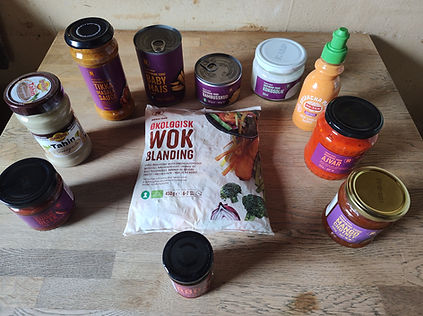
A shopping experiment for entering Asian cuisine.
In a city like Hong Kong the home kitchens are small niches, and street food is often cheaper than buying the ingredients in the supermarkets, opposite in Europe.
For starters I recommend taking a lot of all of these premade accessories like mango chutney etc. for a test drive by using them as dippings for chips/snacks to get familiar with taste, flavor, aromatics or whatever the chefs call them these days.
Chopsticks

Dexterity
It may be difficult to eat with chopsticks instead of a knife and fork. A beginner's trick is to put a rubber band about an inch from the top, and from there get used to how and where to place your fingers.
Cookware
Wok pan vs Wok pot
What is the difference between a wok pan and a wok pot
First choice: A wok pan, not a wok pot for high temperatures.
Second choice: Not a non-stick or ceramic pan for high temperatures.
Third choice: No gas stove, no wok pans at all!
Fourth choice: For an electrical stove, preferably an iron cast wok pan
Fifth choice: Iron cast is too heavy to do the shaking of the pan.
Sixth choice: A wok has been around since the 90's
Seventh choice: If you don't have a wok pan, use a stainless-steel sauté pan with a heavy bottom.
A stainless-steel sauté pan with a lid can also be used as a wok pot for slow cooked long-term simmering.
A stainless-steel sauté pan has a larger surface, so you don't have to fry all of the ingredients in numerous batches.
Thai Food
Thai Food glass noodles also known as cellophane noodles.
Pak choy, Pak choi or Bok choy (a sort of cabbage)
Coconut oil for frying garlic, chicken or salmon, etc.
Coconut milk to make a creamy sauce
Peanut butter or even peanuts as toppings.
Coconut oil (not coconut milk) melts surprisingly fast and doubles in amount of expected.
Coconut oil is pretty expensive.
When it comes to coconut milk be careful not to reduce too much on it or the consistency thickens.
Cutting Boards
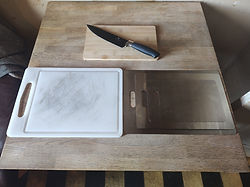
-
Top: Wooden or bamboo
-
Left: Plastic with a juice groove
-
Right: Titanium alloy with SAE 304 steel (alloy of iron, carbon, chromium and nickel)
Chicken is an excellent introduction to Asian cuisine,
but it also introduces the risk of salmonella.
1. Wooden or bamboo cutting boards is a risk
2. Plastic cutting boards is also a risk besides the risk of micro plastic in the food and being an environmental hazard too
3. Titanium cutting boards is the latest shriek
To utilize any cutting board with a juicy groove, tilt it diagonally so the juice can drop off nice and fashionable.
The wooden or bamboo cutting boards might still come in handy for a photogenic shot.
Scandinavian ways of cooking chicken salmonella free for oven use
1. Denmark - 220°C/428°F - 60 min.
2. Sweden - 175°C/347°F - 70 min.
Chicken
Chicken breast fillet vs chicken drumstick fillet
Chicken breast fillets and drumstick fillets offer distinct qualities. Breast fillets are known for being lean, mild-flavored, and relatively low in fat, making them a popular choice for health-conscious individuals. Drumstick fillets, on the other hand, boast a richer, more intense flavor and a higher fat content, which contributes to their juicier, more tender texture.
Both baking soda and cornstarch are used when velveting chicken, but they serve different purposes. Baking soda tenderizes the chicken by breaking down proteins, while cornstarch creates a coating that helps retain moisture and create a slightly crisp texture during cooking. Some recipes use both, with baking soda for tenderizing and cornstarch for coating.
Baking Soda
-
Tenderizing: Baking soda raises the pH of the chicken, which helps to break down muscle proteins, resulting in a more tender texture.
-
Rinsing: After using baking soda, it's crucial to rinse the chicken thoroughly to remove any residual taste or bitterness.
-
Application: It's generally used as a marinade, often with a short marinating time (e.g., 15-20 minutes).
Cornstarch
-
Coating: Cornstarch creates a thin, protective layer around the chicken, which helps to lock in moisture and prevent it from drying out during cooking.
-
Texture: It also helps to create a slightly crispier exterior when cooked, especially in stir-fries.
-
Application: It can be used in the marinade (along with other ingredients) or as a final coating before cooking.
Combination
-
Some recipes use both, first tenderizing with baking soda, then coating with cornstarch before stir-frying.
-
This method is particularly useful for achieving a restaurant-quality, tender, and slightly crispy texture in stir-fried chicken.
Other Ingredients
-
Other common ingredients in velveting marinades include salt, sugar, Shaoxing wine, soy sauce, and oil.
-
These ingredients contribute to flavor and help to further enhance the texture and moisture retention.
Cambodia/Taiwan Cuisine
This region has been in a conflict for a century about temples.
Food for thought unites us all.
Entry level
Chicken over rice
Pork over rice
Singapore/Indonesia/Malaysia
If you want to describe Singapore cuisine with three words: Give me more!
For 40 days and 40 nights in religious terms means for an unspecified amount of time beyond a month.
In Singapore/Indonesia/Malaysia cuisine some food contains cyanide like nuts, so they boil it and bury it in the earth for 40 days to leach it. Nutmegs and some berries are also rich on cyanide! (Blåsyre in Danish).
Singapore/Indonesia/Malaysia cuisine looks just right for me entering Asian cuisine.
There are limits to what I think of Thai cuisine to begin with.
Interesting for this international cuisine is that white rice might have become soaked in a stock making it look like brown rice. Soy sauce might have been caramelized making it thicker called black sauce.
You can also expect coconut rice.
You can also expect rice and mackerel to be served as the national breakfast menu.
Palestine/Jordan Cuisine
Palestine and Jordan cuisine can also be done under the same roof.
Temple Cuisine
Temple cuisine, particularly Korean Buddhist temple food, is a sustainable, plant-based, and mindful culinary tradition that excludes meat and the five pungent herbs (garlic, onions, chives, green onions, leeks). It emphasizes seasonal, locally sourced, and fermented ingredients, focusing on natural flavors, health, and respect for nature while avoiding waste.
-Cooking is a spiritual practice!
Korean Cuisine
Leftover rice is perfect for bibimbap, a traditional Korean dish designed to use up leftover rice, veggies, and meat. Reheat rice in the microwave, then top with sautéed vegetables (carrots, spinach, mushrooms, zucchini), protein (beef, tofu), a fried egg, and gochujang sauce.