


🏳️Vexillology🏳️
Introduction
👑
//////////////////////////////////
// Awaiting Command! //
/////////////////////////////////
👑
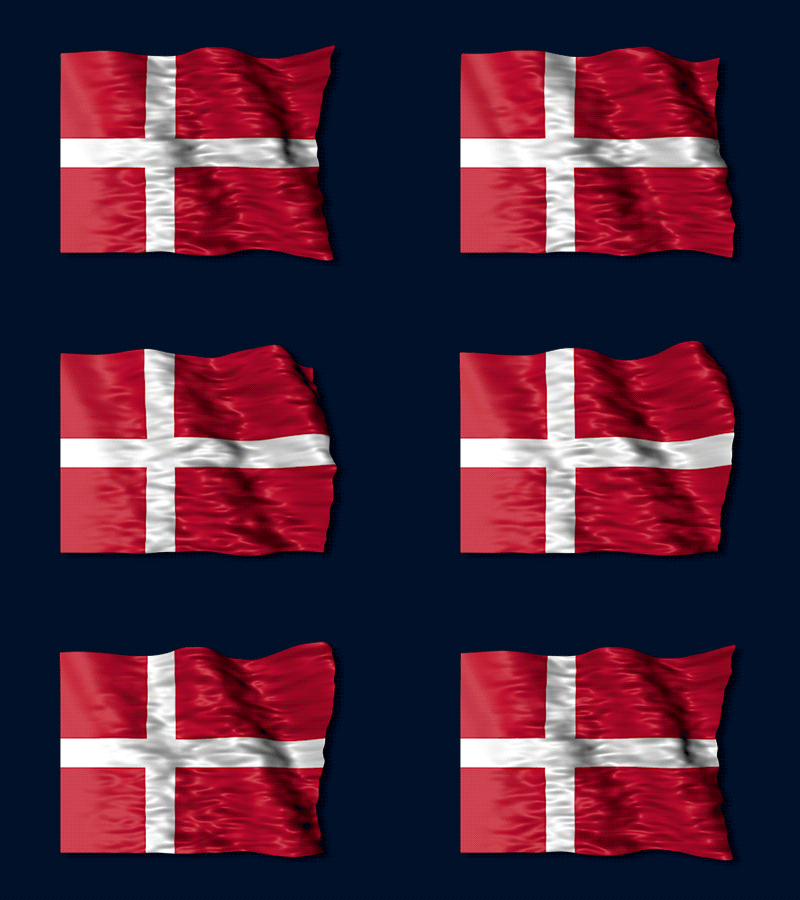
Dannebrog vs Denmark
LCARS Retrieval
National Anthems
Dannebrog
Summer Games (Commodore 64) - Danish anthem
Denmark
Der er et yndigt land
King's Mound

Kongehøj (Aabenraa) - Wikipedia, den frie encyklopædi
Visit Sønderjylland - Tourist guide
Mound vs Mount
Note: In heraldry, a mount and a mound are entirely different elements with completely different meanings. A mount is a graphical representation of a hill or mountain placed in the base of the shield, whereas a mound (also known as an orb or globus cruciger) is a sacred or royal symbol consisting of a globe topped with a cross. ✝
-I spent one Christmas Eve sleeping on the King's Mound. You can read more about that in "Soldier's Diary Vol. II*.
🏳️ Flag of Truce 🏳️
In heraldry and vexillology, a white flag for surrendering or requesting a truce is not given a specialized heraldic title of its own; instead, it is simply called a white flag or a flag of truce, while the color white itself is termed argent (silver/white).
🏳️Key Heraldic and Vexillological Context
-
Argent: In the formal language of heraldry (blazon), white is known as argent and traditionally represents peace and sincerity.
-
Blank Standards: In medieval warfare, a plain white banner or standard - sometimes called a blank standard - often indicated neutrality, a lack of specific hostile master, or a flag of truce.
-
Striking the Colors: The physical act of hauling down or surrendering a military or naval flag is known as striking the colors rather than a unique flag name.
-
International Law: The use of a plain white flag to signal surrender, request a ceasefire, or arrange a parley was formally codified under the Hague conventions.