

✡ Sextant/Horizon ✡
✡ The Sextant ✡
{Formula}
Angle of incidence = angle of deflection
Before the sextant was invented there was the astrolabe instrument.
-
Marine sextant
-
Aircraft bubble sextant
The [frame] of a sextant is in the shape of a [sector] which is approximately 1⁄6 of a circle (60°), hence its name (sextāns, sextantis is the Latin word for "one sixth").
Both smaller and larger instruments are (or were) in use: the octant, quintant (or pentant) and the (doubly #reflecting) quadrant span [sectors] of approximately 1⁄8 of a circle (45°), 1⁄5 of a circle (72°) and 1⁄4 of a circle (90°), respectively. All of these instruments may be termed "sextants".
A sextant is a doubly #reflecting navigation instrument that measures the angular distance between two visible {objects}. The primary use of a sextant is to measure the angle between an astronomical {object} and the horizon for the purposes of celestial navigation.
The estimation of this angle, the altitude, is known as sighting or shooting the object, or taking a sight.
The angle, and the time when it was measured, can be used to calculate a position line on a nautical or aeronautical chart. For example, sighting the Sun at noon or Polaris at night (In the Northern Hemisphere)
to estimate latitude (with sight reduction).
Sighting the height of a landmark can give a measure of distance off and held horizontally, a sextant can measure angles between objects for a position on a chart. A sextant can also be used to measure the lunar distance between the moon and another celestial object (such as a star or planet) in order to determine Greenwich Mean Time [G:M:T] and hence longitude.
The Devil's eye: The so-called established science relies on physical evidence in terms of #visual testimony.
Holistic approach: Micro cosmos = Makro cosmos.
Source of the #light
Spring equinox: Set the clocks 1 hour forward.
Summer solstice: The longest day of the year.
Autumn equinox: Set the clocks 1 hour back.
Winter solstice: The shortest day of the year.
#Lv0 In the beginning zero did not exist, which led to different numeral systems. A #lv1 baseline was the beginning (direct forward).
Optical illusion

Meniscus
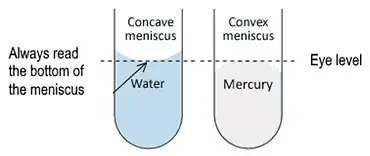
How to get an exact volume reading in laboratory glass fixtures.
A true horizon vs visible horizon

The true horizon is circle defined by the line of sight from an observation point that is a tangent line to a sphere. The visible horizon is the actual local line dividing Earth features and sky.
Intellectual horizons for orientation △
1. Astronomical horizon
2. True horizon
3. Visible horizon
Distant horizons
Expanding your horizons
Optics and Photonics
#Lv6 Keywords
#AbsentMindedness
#Abstraction #Geometric Abstraction
#Afterlife
#Aspect ratio
#Aura Energy {field}
#Aurora Borealis (Northern lights)
#Beam #TractorBeam (Star✩Trek)
#Bioscope (an early generic name for a movie camera)
#Camera
#Candle #CandleSrying
#Chimera
#Cinema
#Clairvoyance (a claimed psychic ability to gain information about an {object}, person, [location], or physical event through extrasensory perception (ESP). ESP is stimulated in those with artistic abilities)
#Corona
#Daydream #Lucid dream
#Deepfake [pictures], [videos] and #AI generated [music]
#Delusion
#Diorama
#Eclipse #lunar eclipse #solar eclipse
#Ethereal (extremely delicate and #light in a way that seems not to be of this world)
#Fog
#Fractal structures
#Hallucination
#Helix/Vortex
#Hell (means bright in German)
#Hindsight
#Holistic (#Macro cosmos vs. micro cosmos)
#Hologram
#Horizon #Visible horizon vs. True horizon
#Illusion #OpticalIllusion
#Illustration
#Imaginary #Imagination #Imagining #Vivid imagination
#LASER (Acronym: Light Amplification by the Stimulated Emission of Radiation)
#Limelight
#Māyā (Vedic, the powerful force that creates the cosmic #illusion that the phenomenal world is real)
#Microscope
#Mirage (Fata Morgana)
#Mirror #Mirror scrying
#Numeral vs. phenomenal universe
#Optical illusion
#Phantasmagoria
#Phantom
#Photonics
#Physical vs. Logical
#Prism /△ (convex vs. concave)
#Purgatory #Digital Purgatory
#Reality #AugmentedReality (AR) #VirtualReality (VR)
#Reflection (micro reflections on a macro scale)
#Refraction (phenomenon of light)
#Remote viewing (#mediumship, a technique to see the living, not the dead)
#Retrospective
#Sexology (#Initio of life/death cycle (8))
#Scalability
#Scanning
#Scintillation
#Silhouette (the dark shape and outline of someone or something #visible in restricted light A/#gainst a brighter background)
#Skimming through the [pages]
#Speculation of the wise (philosophy)
#Speculum
#Spectrograph
#Spectrum #Spectrum analyzer
#Telescope vs. Space Telescopes (Hubble, Kepler, James Webb, etc.)
#The eye of Ra (Egyptology)
#The eye of the tiger (make it look so delightful it seems not to be of this world)
#The source of the Sun light came in the #twillight of the moon
#The curse of the sun and the moon
#Trance
#TV #TV scrying (Poltergeist 1982, Big bang theory stretched out light waves becoming microwaves, that causes the static noise on a TV channel)
#Twilight
#Vision
Navigating the Horizon
To estimate the time until sunset, extend your arm fully toward the horizon, bend your wrist so your palm faces you, and stack your fingers between the bottom of the sun and the horizon. Each finger width represents roughly 15 minutes of remaining daylight, making four fingers equal to one hour.
Parallax
The parallax effect is an optical illusion where objects closer to the viewer appear to move faster or shift position more dramatically than objects further away. It is our brain's way of perceiving 3D depth and is used extensively in photography, video games, and web design.
Measure distance using your thumb and eyes by utilizing the anatomical trick of parallax. Because your outstretched arm is roughly ten times the distance between your eyes, you can multiply any optical "shift" by 10 to find the distance.
The specific steps to estimate distance in the field
-
Extend your arm: Hold one arm straight out in front of you with your thumb pointing up.
-
Close one eye: Close your right eye and line up the left edge of your thumb with an object in the distance (e.g., a car, sign, or tree).
-
Switch eyes: Without moving your head or arm, close your left eye and open your right eye. Your thumb will appear to "jump" to the right.
-
Estimate the jump: Estimate the physical size of the gap your thumb appears to have jumped. For example, if your thumb moved past two cars, and you know a car is roughly 4.5 meters (15 feet) long, the gap is about 9 meters (30 feet).
-
Calculate the distance: Multiply that gap measurement by 10. In this example, 9 meters × 10 = 90 meters (30 feet × 10 = 300 feet).
Some suggest that this standard ratio (multiplying by 10) is a highly useful baseline, though a small percentage of navigators suggest multiplying by 8 depending on individual arm lengths.